

How to Train for Your First 5K in the Fall: A Beginner-Friendly Guide
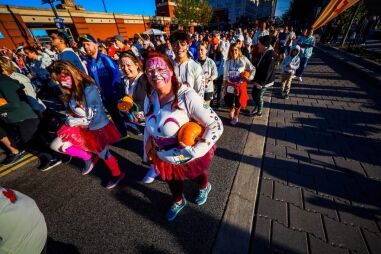
Training for your first 5K this fall?
You don’t need to be a serious runner to do this. You don’t need a perfect training record, a carbon-plated shoe collection, or the kind of personality that gets excited about 5:30 a.m. track sprints.
All you need is a realistic plan, a little consistency, and a goal worth showing up for!
That is part of what makes a fall 5K such a good first race. The weather is usually kinder. The air feels crisp. The layers come out. The season itself gives you a built-in sense of momentum. Instead of trying to “get in shape someday,” you have a real date on the calendar and a finish line to work toward.
And that finish line is more approachable than many people think.
A 5K is 3.1 miles, and beginners complete them all. the. time.
Some run the whole thing. Some use a run-walk strategy. Some walk it from start to finish. Every one of those still counts.
This guide is here to help you train for your first 5K in a way that feels doable, not dramatic. We’ll cover how long to train, how to build up safely, what to wear, what to eat, what to expect in the final week, and how to show up on race morning feeling ready!
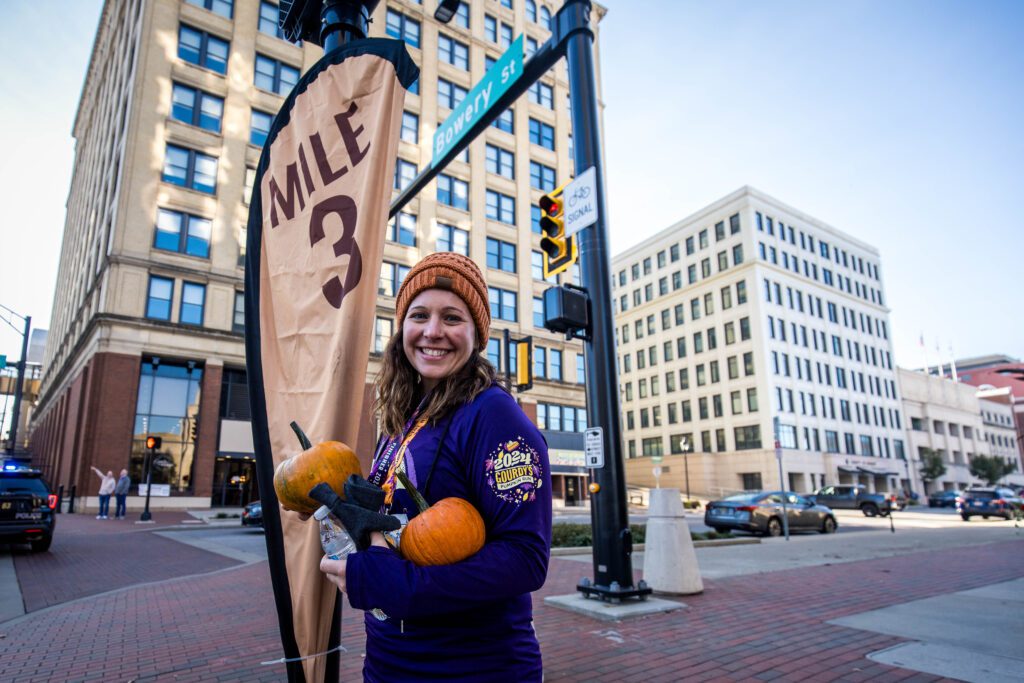
Can beginners really do a 5K?
Yes. Absolutely.
A first 5K is not reserved for “real runners.” It is for anyone who wants a goal, a little structure, and a reason to keep moving. That is one of the best things about this distance. Challenging enough to feel meaningful, but approachable enough that beginners can train for it without needing months and months of prep.
Nervous? That’s totally normal. A lot of first-timers assume everyone else has done this before, knows exactly what they are doing, and will somehow breeze through race day looking calm and gazelle-like. In reality, many people at a 5K are figuring it out as they go.
That is especially true when the event culture is welcoming to walkers and casual participants. Gourdy’s Pumpkin Run leans heavily into that inclusive feel, as it’s a race for everybody (almost 1/3 of participants walk the course!)
So no, you do not need to feel “ready enough” before you begin. Training is how you get ready.
Why fall is such a great season for a first 5K
If you are choosing a season for your first race, fall has a lot going for it.
First, cooler temperatures usually make outdoor training more comfortable than peak summer heat. It is easier to settle into a walk, jog, or run-walk rhythm when you are not dealing with heavy humidity or scorching pavement.
Second, fall gives you a natural routine. Once summer starts winding down, many people are more open to getting back on a schedule. That makes it easier to build a few training days into your week.
Third, fall races tend to feel like events in the best way. There is energy in the air. You are not just going out for another workout. You are building toward something.
And that matters, especially for beginners.
If your first race ends up being Gourdy’s Pumpkin Run, check out our ‘What to Expect’ guide here!
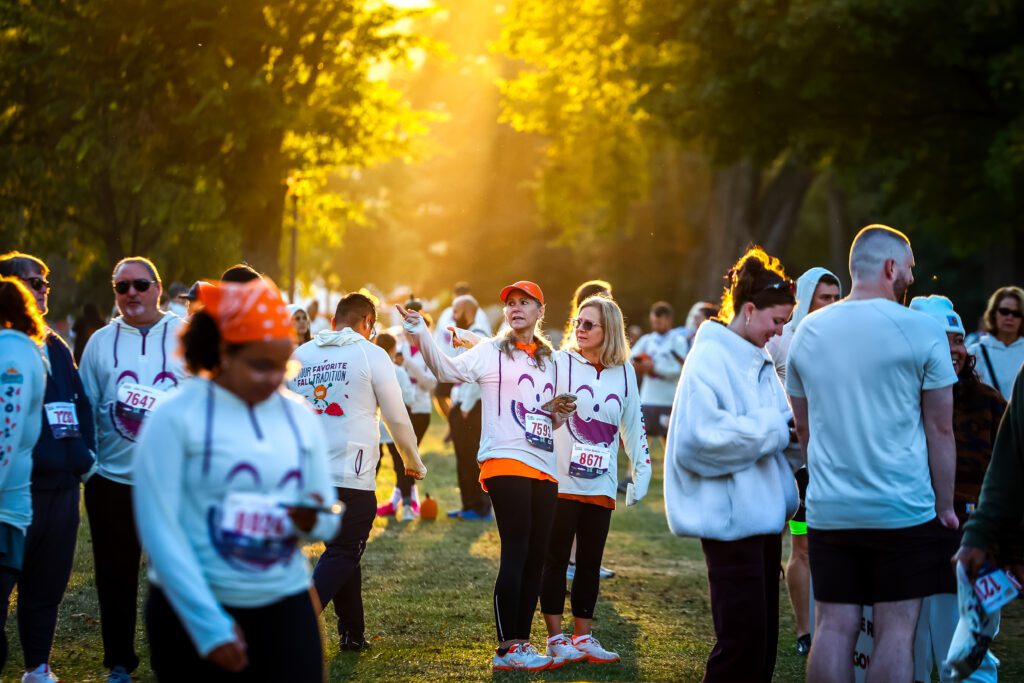
How long should you train for your first 5K?
For most beginners, 6 to 8 weeks is a strong training window.
If you already walk regularly, go to the gym, or stay moderately active, you may feel good with a 6-week build.
If you are starting from scratch, 8 weeks is usually better. It gives your body more time to adapt and gives you room for real life, such as missed workouts, travel, low-energy weeks, or weather.
A simple rule of thumb:
Six weeks may work well if:
- you already move a few times a week
- you can comfortably walk 30 minutes
- your main goal is to finish
Eight weeks is usually better if:
- you have not been active in a while
- jogging feels difficult right now
- you want a more gradual build
- you want extra time to build confidence
Could you do a 5K with less time than that? Possibly. But if your goal is to feel prepared instead of panicked, a little more runway helps.
Before you jump into a plan, take 10 minutes to set yourself up well:
Choose a goal that fits a first race
A first 5K goal should be simple!
Good beginner goals include:
- finish the race
- stick to a run-walk plan
- walk the whole thing with confidence
- jog for longer stretches than you can right now
- feel calm and prepared on race morning
You do not need a finish-time goal unless that genuinely motivates you.
Get shoes that feel comfortable
You do not need “the best running shoes on the internet.” You need shoes that feel good on your feet and support the kind of training you plan to do.
That means:
- no pinching
- no heel slipping
- no rubbing
- no “maybe they’ll break in” optimism
Comfort will win here!
Be honest about your schedule
The best training plan is the one you will actually follow.
If three workout days per week feels realistic, build around three. That is plenty for many beginners. You do not need to create an aspirational athlete calendar that falls apart after eight days.
Start where you are
This is a big one.
Do not build your plan around the version of you that is already fit, already motivated, and definitely going to wake up early every morning. Build it around the version of you that exists today.
That is the version that needs the plan.

A simple overview of how beginner 5K training works
At a high level, beginner 5K training is wonderfully uncomplicated.
You do not need speed workouts, complicated mileage targets, or a color-coded spreadsheet.
You mainly need four things:
1. Consistency
A few workouts each week will do far more for you than one heroic effort followed by five days of nothing.
2. Gradual progression
Each week, you do a little more than the week before.
That might mean:
- walking longer
- jogging for slightly longer intervals
- cutting down your walk breaks
- making one weekly session a little longer
Not wildly more. Just a little more.
3. Easy effort
Most beginner workouts should feel manageable. You should not finish every session wrecked.
If you are breathing hard the entire time or dreading every workout, you are probably going too fast.
4. Recovery
Rest days matter. They are not optional “lazy days.” They are part of how your body adapts to the work you are doing.

An 8-week beginner 5K training plan
This plan is built for first-timers who want to feel prepared, not punished.
A few notes before you start:
- Warm up with 5 minutes of easy walking before each session.
- Cool down with 5 minutes of easy walking after each session.
- “Run” means an easy, conversational effort.
- It is completely fine to repeat a week before moving on.
- Rest days are part of the plan.
Week 1
Workout 1: Walk 25 minutes
Workout 2: Alternate 1 minute jogging, 2 minutes walking for 20 minutes
Workout 3: Walk 30 minutes
Week 2
Workout 1: Walk 30 minutes
Workout 2: Alternate 1 minute jogging, 90 seconds walking for 24 minutes
Workout 3: Walk or easy run-walk 30 minutes
Week 3
Workout 1: Alternate 90 seconds jogging, 2 minutes walking for 24 minutes
Workout 2: Walk 30 minutes
Workout 3: Alternate 90 seconds jogging, 90 seconds walking for 24 minutes
Week 4
Workout 1: Alternate 2 minutes jogging, 2 minutes walking for 24 minutes
Workout 2: Walk 30 to 35 minutes
Workout 3: Alternate 3 minutes jogging, 2 minutes walking for 25 minutes
Week 5
Workout 1: Alternate 3 minutes jogging, 90 seconds walking for 27 minutes
Workout 2: Walk 30 minutes
Workout 3: Alternate 5 minutes jogging, 2 minutes walking for 28 minutes
Week 6
Workout 1: Jog 8 minutes, walk 2 minutes, repeat twice
Workout 2: Walk 30 to 35 minutes
Workout 3: Jog 10 minutes, walk 2 minutes, jog 10 minutes
Week 7
Workout 1: Jog 12 minutes, walk 90 seconds, jog 12 minutes
Workout 2: Walk 30 minutes
Workout 3: Jog 20 to 25 minutes continuously, or use short walk breaks as needed
Week 8
Workout 1: Easy jog or brisk walk for 20 to 25 minutes
Workout 2: Easy movement for 15 to 20 minutes
Workout 3: Race day, or a practice 5K effort
That is it. Three main workouts each week. Manageable, beginner-friendly, and enough to build real confidence.
Looking for the best 5K training app? We suggest Strava (it’s free!) and even have an official GPR club with 21,000+ members here.

Should you walk, run, or use a run-walk strategy?
All three are valid for different reasons:
Walking the 5K
Walking is a great option if your goal is to finish, enjoy the atmosphere, and build confidence around the distance. It is especially helpful if you are newer to exercise or returning after a long break.
The key is to practice walking with purpose so the time on your feet feels familiar.
Run-walking the 5K
This is one of the best beginner strategies out there.
A run-walk approach helps you control effort, avoid starting too fast, and keep the whole race feeling more manageable. Many first-time participants actually enjoy the experience more with planned walk breaks than with the pressure of trying to run nonstop.
Running the entire 5K
This is a great goal too, as long as it feels motivating and not like some test of whether you “count.”
You do not get bonus points for making your first race more stressful than it needs to be.
How hard should your workouts feel?
Easy. Easier than most beginners think, actually.
One of the most common mistakes in first-5K training is going too hard, too often. People assume every workout needs to feel impressive in order to work. It does not.
A better goal is this: most sessions should feel like something you could finish and still keep going for a little longer if you had to.
You should not be sprinting through every run interval or gasping your way through the workout.
You are building endurance, not trying to win Tuesday.
What should you wear for a fall 5K?
Fall weather can be tricky because it often feels colder while you are standing still than it does once you start moving.
That is why light, practical layers usually work best!
Good options for a fall 5K:
- a moisture-wicking shirt or tank
- a light long-sleeve top or quarter zip if it is chilly
- shorts, leggings, or running tights
- socks that do not bunch or rub
- shoes you have already trained in
Try to avoid:
- brand-new shoes on race day
- heavy cotton that stays wet
- overdressing because the start feels cool
- anything that bounces, pinches, or needs constant adjusting
A helpful rule is to dress for how you will feel once you are moving, not for how you feel standing in the parking lot.
What should you eat and drink before a 5K?
You do not need a complicated fueling plan for a 5K.
For most beginners, the best pre-race approach is simple:
- eat something familiar
- keep it light
- drink water normally
- avoid experimenting
A few easy options:
- toast with peanut butter
- a banana
- oatmeal
- yogurt
- a bagel
- a granola bar
Try to eat early enough that your stomach feels settled by the start.
And yes, the old race-day rule still holds up: nothing new on race day.
What to do the week before your first 5K
Race week is not the time to cram.
You are not going to gain a huge amount of fitness in the final few days. What you can do is help yourself feel rested, organized, and calm.
During race week:
- keep workouts short and easy
- prioritize sleep
- drink water consistently
- check the forecast
- lay out your clothes ahead of time (and post your pre-race flatlay on Instagram, of course)
- make sure you know where you are going
- read event details before race morning
The goal is to arrive feeling steady, not scrambled.
First 5K race morning checklist
Race morning feels much easier when you are not rushing.
Use this simple checklist:
- wake up with enough time to get ready without panic
- eat a familiar light meal or snack
- wear the gear you already tested in training
- bring whatever check-in or bib info you need
- arrive early
- use the restroom before heading to the start
- do a short warm-up walk
- take a breath and remind yourself that nerves are normal
You do not need to show up feeling fearless. You just need to show up ready to begin.
Common first-5K mistakes to avoid
Starting too fast
The opening excitement can trick people into going out way harder than they trained for.
Try to start a little easier than you think you need to.
Doing too much too soon
More is not always better. Your body responds well to steady, gradual progress.
Wearing something untested
Race day is not the day to discover your socks slide down, your shirt chafes, or your shoes feel weird after mile one.
Skipping rest because you feel motivated
Motivation is great. Recovery is still part of the plan.
Comparing yourself to everyone else
Someone will be faster. Someone will look more experienced. Someone will barely seem to be trying.
None of that changes your race.
Your first 5K is about your own start line and your own finish line.

FAQ: training for your first 5K
Do I need to run the whole 5K?
No. A run-walk strategy is a great option, and walking the entire distance is extremely common!
How many days a week should I train?
Three focused workouts per week is enough for many beginners. Extra walking on other days is a bonus, not a requirement.
What if I miss part of my training?
That happens all the time. Pick back up, repeat the previous week if needed, and keep going.
How long does a beginner 5K take?
It depends on whether you run, walk, or mix both. The bigger goal is to cover the distance in a way that feels manageable and strong for you.
What if I feel nervous about race day?
That is normal. Most first-timers feel at least a little nervous. It usually settles once the race starts.
Can I train for a 5K by mostly walking?
Yes. Walking is a great foundation, especially if you are starting from scratch.
The real goal is progress
Your first 5K does not need to be perfect.
It does not need to be fast. It does not need to look impressive from the outside. It just needs to be yours.
Maybe you run more of it than you expected. Maybe you take walk breaks and still feel strong. Maybe you cross the finish line smiling, a little tired, and already thinking about your next one.
That is a win.
Because the biggest thing your first 5K teaches you is not how to be some flawless athlete. It teaches you that you can start, stick with something, and finish.
And that is a pretty good feeling to carry into fall.
Join us by signing up for an in-person race here. Or, run from your own ‘hood via the Virtual 5K here.
